
Walking the moon road.
December 2025

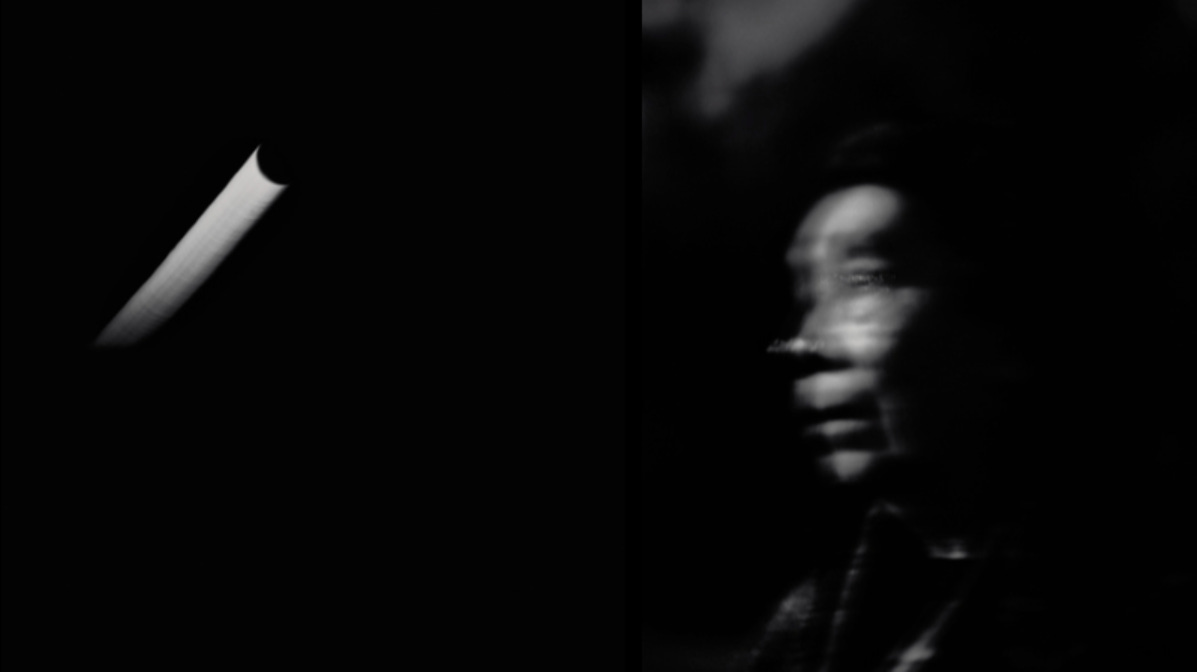
Sometimes the Moon chooses a living ancestor to shine her otherworldly light and rearrange the shadows. In our family, she chose my cousin, acclaimed artist and filmmaker Amos Gebhardt.
Amos has created a body of images where the Moon, the human eye, and the work of liberation meet. Their exhibition, Mångata—a series of portraits and moving images lit entirely by moonlight—traces a shimmering pathway between the eternal and the urgent struggles of this moment on Earth.
In the vast presence of Mångata, I think about bloodlines and moonlines—the invisible threads that run through our ancestry—and through light itself. Mångata is a lyrical Swedish word that speaks of the pathway across water, the silver road cast down by the Moon that invites the courageous into the unknown. In Amos’ hands, that road becomes a ray of light across the eyes of visionaries.
I find something profoundly mythic in the way these images are made: the moonlight, the long exposures, the Earth slowly turning, the bodies barely moving, the Moon leaving her signature in the sitter’s gaze. It feels like a ritual remembered. Two reflective worlds—the timeless and the time-bound—looking at one another and agreeing for a holy moment to record the encounter.
The people in Mångata are not posed as heroes, they are humans shoulder-deep in the rough and troubled water of our times. Yet, under the light of the Moon, they become something akin to shamans of the possible, harbingers of renewal in an age of exhaustion.
This is myth operating as a lens. The Moon does not float above some fixed human timeline; it reflects the labour of those who are attempting to change it. The long exposures stretch time just enough for another more generative story to slip in almost unnoticed: that we might live differently with one other.
Amos’ work reveals how deeply they honour kinship—with collaborators, with queer and more-than-human ecologies, with the history each body carries. Mångata gathers it all into a single gesture: the Moon reaching down to touch the faces of those who are already reaching back on behalf of the rest of us.
To see my cousin midwifing such imagery into the world—images that trouble the given order and make room for the not-yet-imagined—feels like a blessing from my wider ancestry too. As if all those old ones, stretching back through the broken lines, are leaning over the balcony of time and watching Amos trace new patterns of relationship.
The Moon is forever dying and being reborn. So are we. So are our cultures and even our ideas of who counts as us. Mångata reminds me that each cycle of loss and return is an invitation to lay down old certainties, to step onto that silvery thread across the water and let my eyes be marked by a different kind of light.
In a season when so much feels frayed and heavy, Amos’ work arrives like a quiet tide at night. You don’t always hear it at first, but if you stand still long enough, you feel it lapping at your ankles, pulling you gently—almost insistently—toward a future in which our lives are arranged a little more vertically, our feet firmly planted in the dark, fertile soil below and our faces lifted, at last, to the forever-patient Moon.
Please take a few moments to visit Mångata and watch an interview with Amos Gebhardt (beginning at 20:08) from ABC’s ‘The Art of…’ Series.
If you enjoyed this post, please consider joining our mythopoetic community at The Fifth Direction. Through breath, meditation, poetry, storytelling and ritual, we reclaim our mythic imagination and celebrate the return to soul. The Fifth Direction is a welcome community for everyone. This includes people of all genders, faiths, backgrounds, orientations, ages and abilities.
This project is entirely supported by you, the reader and the listener. If joining the community isn’t your path, perhaps you could make a small one-time contribution.